News
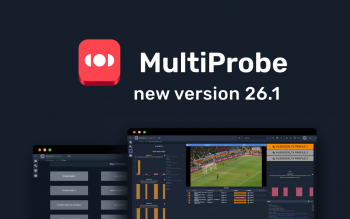

MultiProbe 26.01: Bringing Top-Tier Monitoring Capabilities to Every Facility
19 Feb
We have added a highly requested feature to MultiProbe: the ability to share mosaics with zero latency over NDI. This is yet another capability that solidifies MultiProbe's position as one of the most capable modern signal monitoring solutions available.
Previously, PIP sharing — the ability to distribute signal visualizations across multiple destinations — was only supported via the SMPTE ST 2110 standard. While technically robust, that approach carried significant hardware costs, creating a real barrier for many broadcasters. The new NDI-based implementation dramatically lowers that barrier: you can now distribute mosaics across your network without dedicated hardware, bring up additional displays, and extend monitoring to remote control rooms with minimal additional equipment.
Read on for a full breakdown of what's new in MultiProbe 26.01. Update your system to take full advantage of the latest release.
Mosaic Sharing with Zero Latency Now Available to Everyone
Regardless of where your monitoring streams originate — whether you're recording a program in a studio or receiving signals at the headend — there's often a need to monitor broadcast quality simultaneously across multiple control rooms. To eliminate the need to duplicate signal-receiving infrastructure in every room, we introduced PIP sharing in the previous release (MultiProbe 25.10). That feature is now available over NDI.
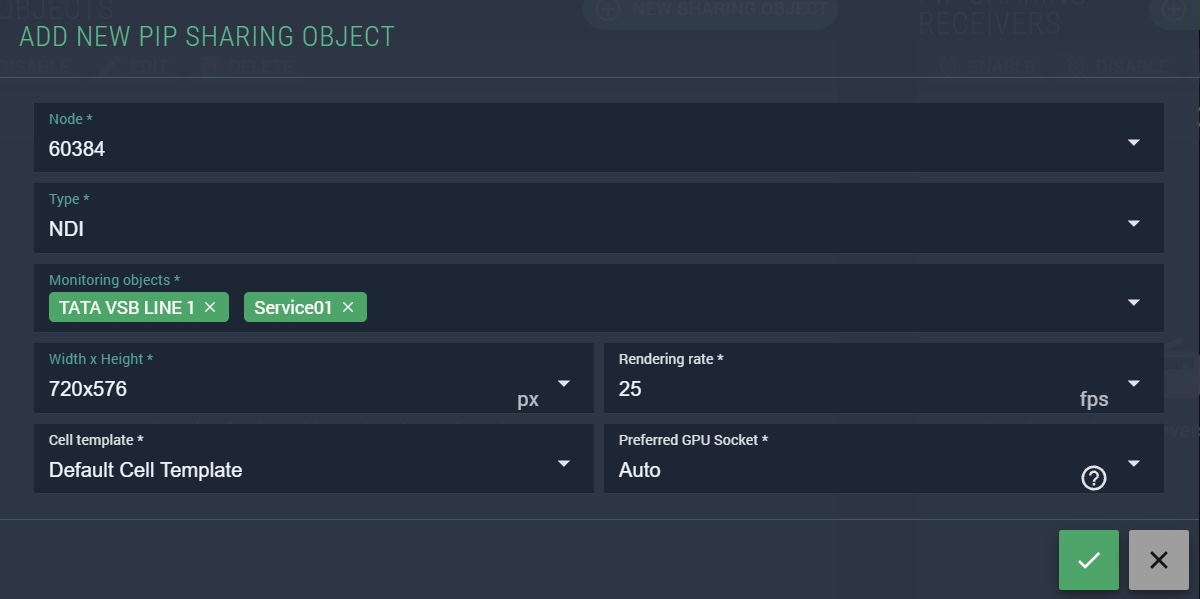
This means leaner infrastructure and the flexibility to deploy in cost-sensitive scenarios for large teams and distributed production environments.
How it works:
- The primary multiviewer decodes the video once.
- Additional workstations and video walls receive the output as a discrete NDI stream.
- Server and network load are significantly reduced.
- The system scales easily across control rooms, video walls, and distributed teams.
In practice: where you previously needed to run dedicated cabling to each control room and decode the same stream ten times for ten operator positions, a single decode is now sufficient. Every other destination receives a ready-made NDI image at the required resolution — with no added latency.
A New Analyzer to Catch Video Format Errors Before They Hit Air
One of the worst scenarios in broadcast is finding out about a problem from viewers rather than your monitoring stack. A file with incorrect scan type, a frame rate mismatch with your playout system — and you're looking at artifacts or a black screen on air.
To catch these errors before they reach broadcast, MultiProbe now includes a VideoFormat Analyzer. It reads key image parameters and fires an alert if they fall outside the expected format — for example, if resolution drops from 1080p to 720p, or if a progressively scanned file is sent where interlaced is expected.
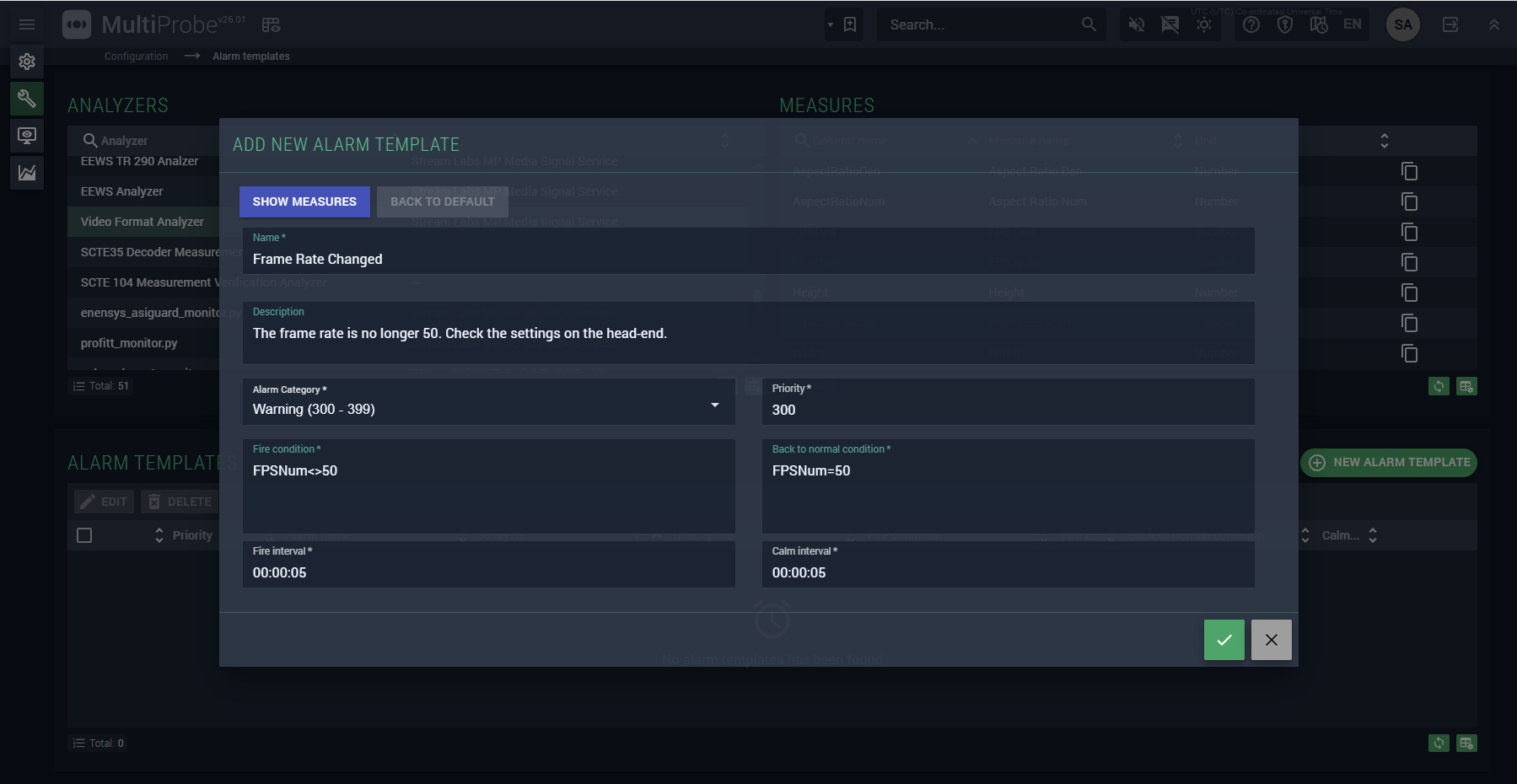
The VideoFormat Analyzer surfaces key signal characteristics: resolution, frame rate, bit depth, chroma subsampling, and more. Use these to build presets and alarm rules tailored to your facility's specific requirements.
Usability Improvements Across the Interface
Incident recordings now accessible directly from the Alarm Table
Investigating an incident typically involves hunting down the right recording, toggling between screens, manually exporting clips, and cross-referencing timecodes. We've streamlined that workflow with:
- One-click MP4 export
- In-line playback of the flagged segment directly from the Alarm Table
This speeds up incident analysis, report writing, and technical reviews considerably.
Switch time zones in one click
Large teams often span multiple time zones. When one operator is in Europe and another is in USA, the same event shows up at different local times — which complicates incident discussions. We've added a TimeZone toggle to make cross-location coordination straightforward.
Cleaner display of measurement units
Measurement values now automatically display with standard SI prefixes (kilo, mega, giga). This reads more naturally in day-to-day use, displays correctly throughout the interface, and reduces the risk of misreading large numeric values.
Stability and Performance Under Heavy Load
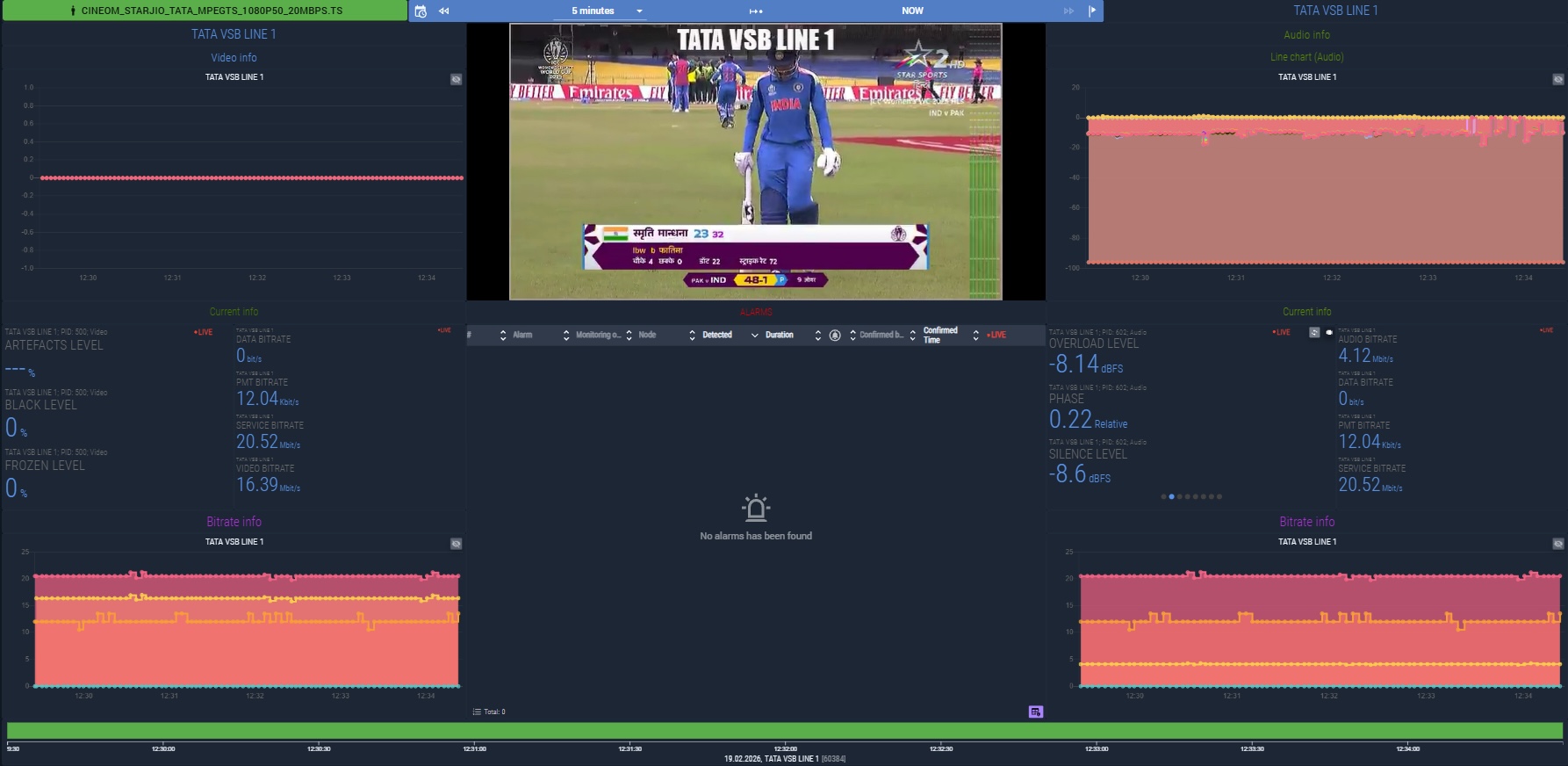
We've made targeted performance optimizations and resolved several stability issues throughout the system.
Key improvements include:
- Reduced latency on RTSP stream ingest
- Optimized NDI output and rendering
- Refined integrated loudness measurement algorithms (EBU R-128), with both manual and automatic reset options
- Resolved stability issues in mosaics, the State Panel, and archive playback
- Improved support for SCTE-35/104, RTP/UDP, HLS, and object export
Release 26.01 makes MultiProbe more dependable for long-running operations and easier for operators to work with day to day.
If you have questions about the new features or want to evaluate them in your own infrastructure, feel free to reach out.